
Land planning and project review support
See what the land needs, review projects in the time you have, and bring your Nation’s knowledge into every decision.
For First Nations lands departments, consultation teams, and land-use planners across Canada.
We all want the same thing
Across Canada, First Nations, governments, industry, and communities share more common ground than is often acknowledged. Everyone at the table wants a balanced approach to development: one that creates real economic opportunity while protecting the land that sustains us all.
Healthy land
Watersheds, habitats, and ecosystems functioning as they were meant to: restored, connected, and resilient for every species that depends on them.
Rights honoured on the land
Hunting, fishing, trapping, and the practice of cultural traditions, honoured on the land, not just defended in courtrooms.
A restoration-based economy
Stewardship that prioritizes restoring what has been lost while minimizing the footprint of new development, creating certainty.
An environment for future generations
Leaving more restored than disturbed, so the land that sustained those who came before can sustain those who come after.
The weight of 100 years of development
Cumulative effects are the result of building a natural resource economy over more than a century. In 2021, Yahey v. British Columbia became the first Canadian court decision to find that cumulative effects had infringed a First Nation’s treaty rights. It confirmed what many First Nations had long said, and it changes how land use planning has to be approached.
The scale is overwhelming
Millions of hectares across overlapping plan areas, with fragmented, inconsistent data, is beyond the capacity of any manual process.
The baseline is hard to see
Quantifying and prioritizing watershed-level ecological impact remains one of the hardest parts of planning. It makes it difficult to focus restoration, limit the impact of new disturbance, and use limited resources well.
Review capacity is stretched
Lands departments are inundated with consultation requests. As governments move major projects faster, including under the Building Canada Act, which requires Crown-Indigenous consultation, the applications and the time to review them properly keep growing.
What genesis-ei gives your team
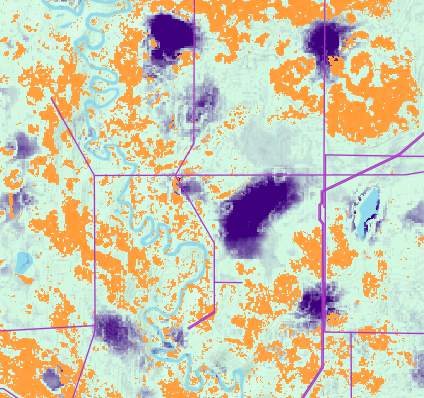
One continuously updated picture of the land, built on billions of data points and 15 ecological factors, and growing.
- It supports land use plans, cumulative effects tools, and community knowledge. It does not replace them.
- Lands, GIS, and consultation teams work from the same intelligence layer that proponents and regulators can use.
- Traditional and community-based knowledge goes directly into the platform, on your Nation’s terms.
- It aligns with adaptive management frameworks, the Yahey decision, and the IFC Performance Standards 6 and 7.
Wildlife occupancy
Moose, caribou, wolves, and species at risk, with corridor tracking, so planning has the baseline it needs to protect critical habitat and movement routes.
Fish habitat
Stream health, connectivity, and existing impacts, so survey and rehabilitation work goes where it is needed most.
Forest and vegetation
Vegetation health, canopy height, and restoration progress over time, including the effects of a changing climate.
Restoration priority
Machine learning combined with community and traditional knowledge, to identify the areas of greatest ecological and cultural concern.
Review projects in the time you have
When applications arrive faster than a team can read them, the first job is knowing where to look.
See the footprint in context
For any proposed project, see the cumulative disturbance, habitat, and watershed condition around it.
Sort by what is at stake
Rank referrals by ecological risk and by your own priority areas, so staff time goes where the land is most affected.
Start from shared data
Proponents and regulators can use the same layer, so conversations begin from the same facts.
Set clear expectations
Apply the Environmental Priority Pathway as guardrails for new development: avoid, minimize, repurpose, mitigate, offset.
- Avoid
- Minimize
- Repurpose
- Mitigate
- Offset
Paid work on the land
Your members already know the land best. genesis-ei can make that knowledge a paid, lasting part of how the land is monitored and restored.
- Land-based monitors. Community members check wildlife, fish habitat, and vegetation on the ground, so what the data shows is confirmed by people who know the place.
- Seasonal knowledge, recorded. Observations from traplines, harvest seasons, and seasonal routes can be recorded in the platform, under protocols your Nation sets.
- Restoration crews and monitors. The platform shows where restoration matters most, so the work, and the jobs, go where the land needs them.
- Project monitoring. Members can be hired to monitor projects through their life, supported by shared data.
The paid roles are stewardship and monitoring work that builds on the skills and time on the land that harvesters already have. Indigenous Guardians programs across Canada show the model: community members employed to monitor ecological health, maintain cultural sites, and watch over sensitive areas and species.
What members record belongs to the Nation, and the Nation decides how it is shared.
With both eyes open, the land heals
Western science and Indigenous Knowledge, working together through the Environmental Priority Pathway. Responsible development and a healthy land are not opposites. Together, they are the path that works for everyone.
Review the baseline
Establish a current cumulative picture across your plan areas: what the land looks like today, in detail.
Bring in your knowledge
Add your Nation’s knowledge of seasonal routes, cultural sites, indicator species, and priority areas, so decisions reflect both eyes.
Restore first, build less
Focus restoration where it matters most, and set clear guardrails for new development.
Work toward net gain
Move from plans to measurable outcomes: more restored than disturbed, with long-term jobs in restoration and in resource development.
- The land healsRestoration focused where it matters, using continuously updated data and guided by community knowledge.
- Species recoverCaribou, moose, and fish habitat tracked and protected early, not discovered late in a permitting process.
- Engagement starts earlyShared data turns consultation into collaboration.
- A restoration economy growsLong-term jobs in restoration and in development.
Questions we hear
Does genesis-ei replace our land use plan or our community knowledge?
No. genesis-ei supports land use plans, cumulative effects tools, and community knowledge; it does not replace them. Your Nation’s knowledge of seasonal routes, cultural sites, indicator species, and priority areas can be brought into the platform so decisions reflect both science and Indigenous Knowledge.
How does this help us review major projects?
As applications arrive, your team can see the proposed footprint in the context of cumulative disturbance, wildlife and fish habitat, and watershed condition, rank referrals by what is at stake and by your own priority areas, and start conversations from the same continuously updated data that proponents and regulators can use.
Can community members be paid for work on the land?
Yes. Community members can hold paid roles monitoring wildlife, fish habitat, vegetation, and restoration progress, building on the skills and time on the land that harvesters already have. These roles can be funded through project agreements with proponents who engage early, government stewardship programs, and restoration contracts. ProDelta helps design the roles, provides tools and training, and shows where the work matters most.
What is Yahey v. British Columbia, and why does it matter beyond BC?
In June 2021 the BC Supreme Court decided in Yahey v. British Columbia that decades of provincially authorized development had left a First Nation unable to meaningfully exercise its treaty rights. It was the first Canadian court decision to find an infringement based on cumulative effects. Lawyers expect its reasoning to be raised in other parts of Canada.
How do we get started?
Start with a conversation about your plan areas, your priorities, and the decisions in front of your team. We then review baseline ecological data for the land you care about, and bring your Nation’s knowledge into the platform on your terms.
We have work to do, together.
Talk with us about land planning, project review, and paid work on the land.