
BC adaptive management
BC expects projects and programs to learn from results and adjust. Build the evidence once, then keep it current so every review starts from the same clear picture.
For any project team in British Columbia that has to monitor results, report on them, and adjust, and for the qualified professionals who support them.
How we help you run adaptive management
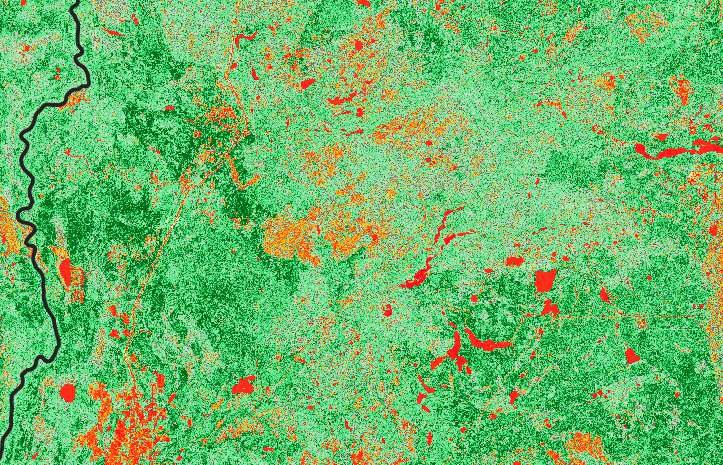
ProDelta supports the evidence side of the cycle: a fast baseline to assess the uncertainty, repeat analysis to monitor change, and clear reporting for review. We cover landscape and habitat evidence. Sampling, lab work, and sign-off stay with your qualified professionals.
Rules last checked . Guidance in use: The six-stage cycle on this page comes from BC Technical Guidance MIN-20, version 3.0, June 2022. This is a plain-language summary, not legal advice.
- What does genesis-ei cover?
- genesis-ei supports the landscape and habitat parts: a fast baseline, repeat analysis to show change, and clear reporting. It does not take water samples or lab measurements, so those stay with your qualified professionals and labs.
- How often does the evidence need to be updated?
- That depends on your plan or authorization. BC guidance for permit-based plans expects an annual review process, so many teams update at least yearly. Check your own requirements.
What BC expects
Adaptive management lets decisions be made despite uncertainty, then reduces that uncertainty by learning from the results. BC guidance describes it as a repeating cycle, and it shows up in permits, planning, and provincial programs.
Where a plan is required, BC’s guidance expects clear, enforceable wording, a plan that is revised over its life, and monitoring that keeps going.
- Name the uncertaintyA plan works best when it says exactly what you need to learn.
- Evidence has to keep comingMonitoring may go beyond routine requirements.
- Regular reviewBC guidance for permit-based plans calls for an annual review that includes Indigenous nation involvement.
- Findings can change the planAdjustments may need an amendment or approval first.
The six-stage adaptive management cycle
BC’s guidance describes one cycle. Here is where fast, repeatable evidence fits at each stage.
Assess
Define the management problem, set measurable objectives, and name the key uncertainties.
How genesis-ei helps: Set a fast baseline so the uncertainty is described with current evidence.
Design
Design plans to meet objectives, test outcomes, and reduce the key uncertainties.
How genesis-ei helps: Show where monitoring should focus across the landscape.
Implement
Carry out the management actions, record what was done, and note any deviations.
How genesis-ei helps: Document work on the ground with fast imagery.
Monitor
Check that the plan was followed and whether it is working.
How genesis-ei helps: Repeat the analysis on a schedule and show change over time.
Evaluate
Compare monitoring results with predictions and investigate surprises.
How genesis-ei helps: Put results beside the predictions in one view.
Adjust
Change practices based on what was learned, and revise the plan itself.
How genesis-ei helps: Give reviewers a clear record to support the change.
Source: BC Technical Guidance MIN-20, Development and Use of Adaptive Management Plans, version 3.0 (June 2022). Descriptions are paraphrased.
What we cover, and what stays with your team
An adaptive management plan has many parts. We support the landscape and habitat evidence, and work alongside your qualified professionals.
ProDelta supports
- A fast baseline of vegetation, wildlife habitat, and aquatic habitat
- Repeat analysis that shows change over time
- Imagery that documents work on the ground
- Clear stories for reviews with Nations, regulators, and communities
Your team and specialists cover
- Field sampling and laboratory analysis, including water sampling
- Permit limits, compliance, and response plans
- The qualified professional’s sign-off on the plan
- Amendments and regulator submissions
How this fits with other BC rules
Adaptive management is the cycle. Cumulative effects analysis and watershed planning supply the evidence it runs on.
Questions we hear
What is adaptive management?
It is a systematic way to keep improving management by learning from the results of what you do. You set objectives, act, monitor, compare results with what you expected, and adjust.
Where does BC use adaptive management?
BC guidance uses it in several places, including permit-based plans described in Technical Guidance MIN-20, the rollout of the Cumulative Effects Framework, forestry programs, and water objectives planning. Ask your regulator which requirements apply to your project.
What does genesis-ei cover?
genesis-ei supports the landscape and habitat parts: a fast baseline, repeat analysis to show change, and clear reporting. It does not take water samples or lab measurements, so those stay with your qualified professionals and labs.
How often does the evidence need to be updated?
That depends on your plan or authorization. BC guidance for permit-based plans expects an annual review process, so many teams update at least yearly. Check your own requirements.
Can the results change what I am required to do?
Yes. BC guidance says findings can lead to changes in management plans, operations, or benchmarks, and some changes may need an amendment or approval first.
Build your evidence once. Keep it current.
Tell us what you need to monitor and report on. We’ll show where a fast baseline and repeat analysis fit.