
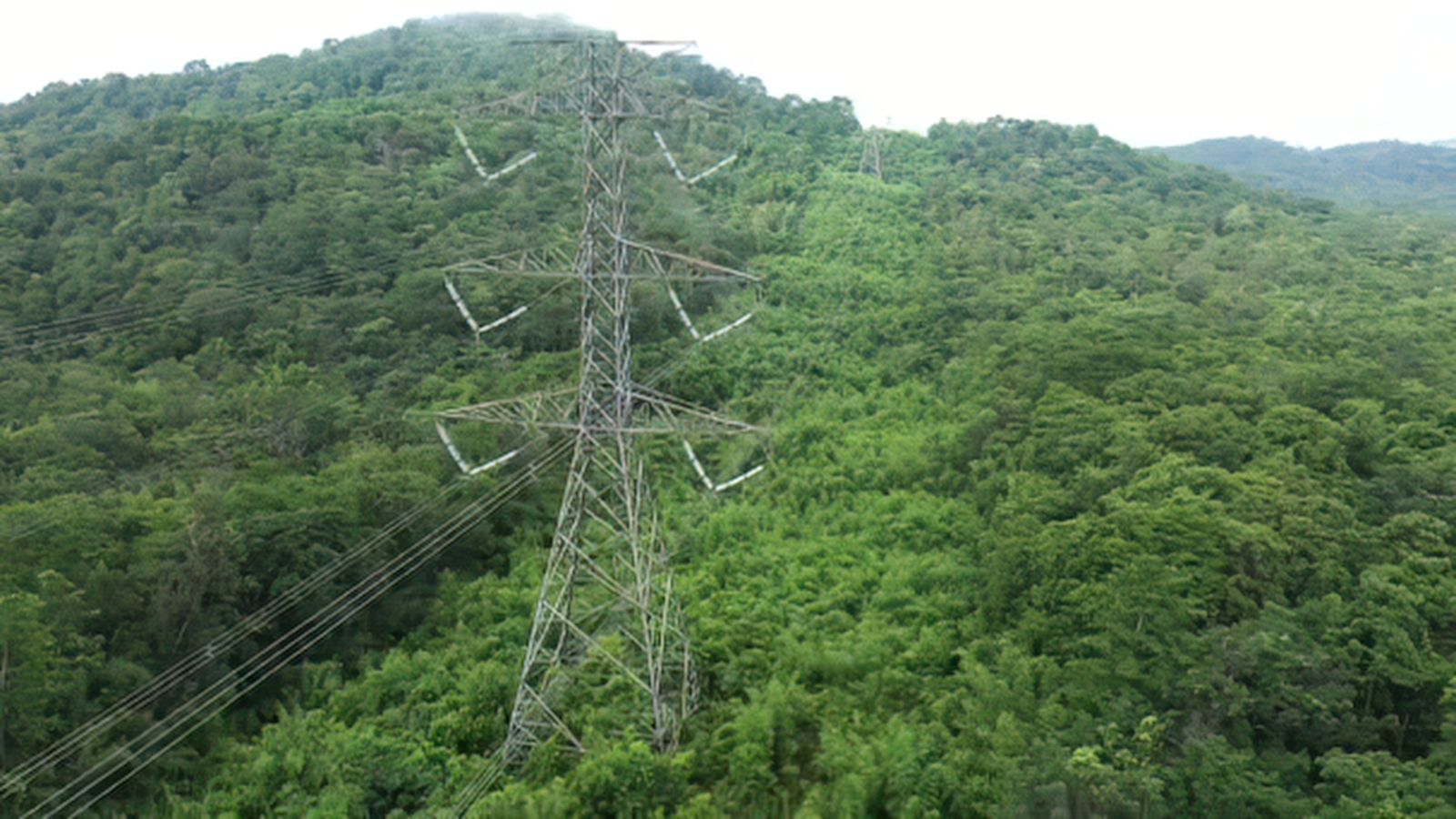
Regulatory certainty for utility operators
Route new transmission lines with certainty, and keep the lines you already operate safe, with environmental intelligence that regulators, First Nations, and your own team can all read.
For transmission and distribution utilities and the regulators who review their lines. Building an independent Canadian economy with First Nations, by reducing regulatory uncertainty and creating jobs.
How we help utilities plan routes and keep lines clear
ProDelta compares candidate transmission routes on environmental risk and cost in one view, and monitors vegetation along lines already in service. genesis-ei supports route planning, and genesis-agu ranks vegetation risk parcel by parcel so crews go where the risk is.
- How does genesis-ei help plan a transmission line route?
- genesis-ei compares many candidate corridors at once. For each one it shows wildlife, species at risk, critical habitat, canopy height without LiDAR, and a high-level cost estimate, so you can select the lowest-risk, lowest-cost route at concept, before capital is committed to a single route.
- How do you keep existing lines clear of vegetation?
- genesis-agu, a module of genesis-ei, monitors vegetation along above-ground lines continuously from satellite imagery. It measures canopy height and species, ranks risk parcel by parcel, and shows where fieldwork is needed first, so crews go where the risk is.
What it costs you
Canada is committed to doubling its electricity grid by 2050. Every route that stalls and every line that fails lands on three groups at once: private capital that needs a return, governments with limited room to spend, and ratepayers already pushing back on rising bills.
- Environmental assessments can cost millions across thousands of kilometres of corridor.
- Feasibility studies take years, with capital at risk.
- Limited, outdated data across several jurisdictions means reacting to problems after the fact.
- Consultation with many First Nations, without transparent data, adds risk you can avoid.
- Last-minute route changes raise engineering costs and delay approvals.
>$1 trillion
The government’s forecast cost to double Canada’s electricity grid by 2050.
Powering Canada Strong, May 202670%
How much interprovincial transmission capacity could grow by 2050, with about 27% by 2035.
National Electricity Strategy$10B+
What utilities spend each year on vegetation management.
T&D WorldWhat you need to do
New line or existing line, start with the evidence. The earlier you start, the less capital is at risk.
Planning a new line
Compare your routes
Run genesis-ei over every candidate corridor at once. Habitat, species at risk, and a high-level cost estimate sit side by side, so you select the lowest-risk, lowest-cost route at concept.
Validate the best one
raven-eye adds high-resolution AI analysis along the selected route, so your qualified professionals ground truth the highest-risk areas first.
Engage early
Share a transparent digital twin of the corridor with First Nations: shared data, shared understanding, shared decisions.
Restore and build
Restore critical offsets and build, creating an environmental net gain through a restoration-based economy.
- Avoid
- Minimize
- Repurpose
- Mitigate
- Offset
Optimize your project within the existing regulatory framework. The Environmental Priority Pathway pairs genesis-ei analysis with First Nation community knowledge at every step. How Two-Eyed Seeing works
genesis-agu monitors vegetation along your lines continuously from satellite imagery, ranks risk parcel by parcel, and shows where fieldwork is needed first, so crews go where the risk is.
What’s in it for regulators
Better data earlier means better decisions. genesis-ei gives the Canada Energy Regulator, provincial commissions, and the Major Projects Office the same continuously updated evidence the utility uses.
Routes side by side
Environmental risk and cost compared in one view, so the case for a route is clear.
Issues surface early
Habitat, species at risk, and cumulative effects are flagged during route selection, before an application is filed.
Clearer applications
Utilities arrive with quantified, comparable data, so there is less back-and-forth.
A shared record
A shared digital twin, and a documented record of vegetation and work done along each line, give everyone the same picture.
Regulators keep the decision. genesis-ei supports qualified professionals and the existing framework.
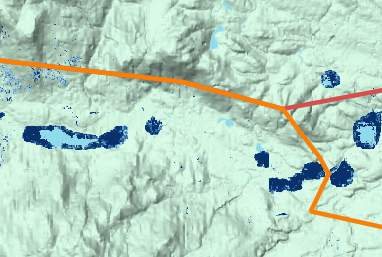
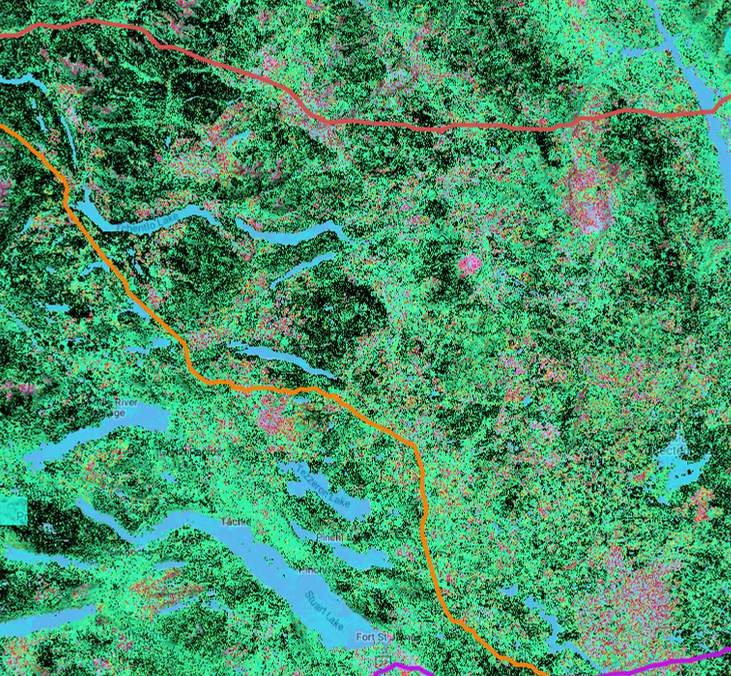
Example: a 700 km multi-route comparison
genesis-ei compared candidate routes across a 700 km corridor, showing moose habitat and canopy height, without LiDAR, for every option.
The rules that apply
What applies depends on the voltage, the length, and whether the line crosses a border. These are the main frameworks.
Federal
Canadian Energy Regulator Act and Impact Assessment Act
Federal lawThe Canada Energy Regulator regulates international and designated interprovincial transmission lines. New international lines of 345 kV or more needing 75 km or more of new right-of-way are designated projects, and for lines needing 75 km or more the final public interest decision is made by the Governor in Council. Amendments registered September 3, 2026 (SOR/2026-185) took effect on registration and remove the overlap between the two Acts.
National Electricity Strategy and the Major Projects Office
Federal strategyPowering Canada Strong says the government will prioritize projects of national interest that support electricity system growth, through a Transmission InterConnect Investment Strategy referred to the Major Projects Office.
Species at Risk Act and Migratory Birds Convention Act
Federal lawProtect listed species and migratory birds. Early habitat mapping along candidate routes, and nesting-season timing for clearing, matter.
Alberta
Alberta Utilities Commission Rule 007
Alberta Utilities CommissionSets the application requirements for transmission lines and substations.
Alberta Reliability Standard FAC-003-AB
Reliability standardRequires transmission facility owners to run a vegetation management program, with documented clearances, an annual work plan, tracked work, and reporting of vegetation-related outages.
Power Line Hazard Assessment Plan
Alberta Wildfire requirementApplies to power lines across Alberta, and is part of the pre-application requirements for approvals inside the Forest Protection Area.
British Columbia and Ontario
BC Wildfire Act and Wildfire Regulation
Provincial legislationIndustrial operators, including utility transmission operations, must carry out fire hazard assessments and abatement.
BC Utilities Commission wildfire mitigation planning
Regulatory expectationThe Commission expects utilities to maintain and report on wildfire mitigation planning.
Ontario Class Environmental Assessment for minor transmission facilities
Provincial processTransmission lines of 345 kV or more and 75 km or more are excluded from the Class Environmental Assessment and are subject to an Individual Environmental Assessment.
The full vegetation rules are on the Corridor Vegetation Management page.
This is a general summary, not legal advice. genesis-ei and genesis-agu support qualified professionals and your documentation; decisions remain with the regulators. These rules are changing quickly. Confirm requirements with your regulatory team.
Questions we hear
How does genesis-ei help plan a transmission line route?
genesis-ei compares many candidate corridors at once. For each one it shows wildlife, species at risk, critical habitat, canopy height without LiDAR, and a high-level cost estimate, so you can select the lowest-risk, lowest-cost route at concept, before capital is committed to a single route.
What is in it for regulators?
Regulators get the same continuously updated evidence the utility uses. Habitat, species at risk, and cumulative effects are flagged during route selection, before an application is filed, and applications arrive with quantified, comparable route data. A shared digital twin of the corridor gives regulators, utilities, and First Nations the same picture. Regulators keep the decision.
Does this replace environmental assessment or consultation?
No. It works within the existing regulatory framework. It gives qualified professionals better data earlier, so they can complete environmental validation assessments with more certainty, and it gives First Nations transparent data from the first conversation.
How do you keep existing lines clear of vegetation?
genesis-agu, a module of genesis-ei, monitors vegetation along above-ground lines continuously from satellite imagery. It measures canopy height and species, ranks risk parcel by parcel, and shows where fieldwork is needed first, so crews go where the risk is.
Which Canadian rules apply to transmission lines?
It depends on the voltage, length, and whether the line crosses a border. Common ones include the Canadian Energy Regulator Act and the Impact Assessment Act for international and designated interprovincial lines, Alberta Utilities Commission Rule 007 and the Alberta Reliability Standard FAC-003-AB for transmission vegetation management, British Columbia’s Wildfire Act and utility wildfire planning expectations, and Ontario’s Class Environmental Assessment for minor transmission facilities. Confirm requirements with your regulatory team.
Is there a national plan to expand transmission?
Yes. On May 14, 2026 the federal government announced Powering Canada Strong, a National Electricity Strategy to double Canada’s electricity grid capacity by 2050, at a forecast cost of about $1 trillion. It estimates interprovincial transmission capacity could grow by about 27 percent by 2035 and 70 percent by 2050.
Route with certainty. Protect every line.
Responsible developers who move quickly will benefit most from this once-in-a-generation opportunity.